Gerald Wade
The Seven Dials MysteryGerald Wade’s apparently carefree manner makes him easy to underestimate, but his death at Chimneys is the first murder at the heart of the Seven Dials mystery. An unfinished letter shows that he had become alarmed by Seven Dials and believed he was close to discovering something; the investigation ultimately reveals that Jimmy Thesiger poisoned him and staged the scene to resemble an accidental overdose.
Identity and Introduction
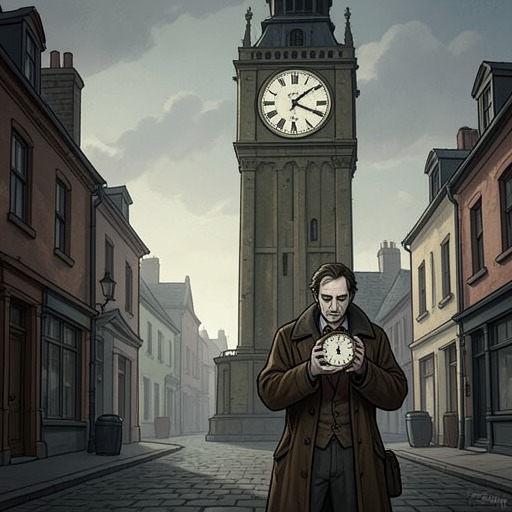
Wade first appears emerging from the breakfast room at Chimneys. The narrator measures him against Jimmy Thesiger: both are fair and cherubic, but Wade is described as fairer still, with a vacuous expression that makes Thesiger seem intelligent by comparison. The contrast establishes Wade’s outwardly unremarkable, almost foolish appearance without proving that he lacks intelligence. In retrospect, that appearance becomes part of the mystery: the man who seems least capable of noticing what is happening has, in fact, become excited by a discovery.
His ordinary social presence is reinforced by the reactions to his absence. When the household learns he has not come downstairs, Tredwell reports that Williams has gone to his room and returned agitated, believing the young man has died in his sleep. Jimmy and Ronald Devereux stare at the news; Devereux rejects it and rushes upstairs, hoping Williams has made a mistake. The abrupt movement from routine breakfast expectations to a suspected death gives Wade’s absence its first terrible significance.
The Letter and His Growing Alarm
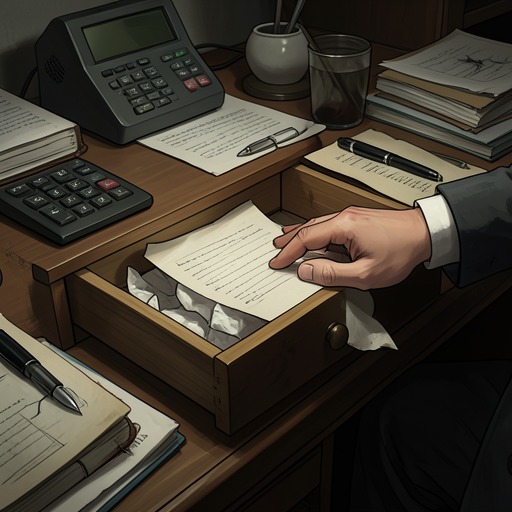
Bundle Brent later identifies an unfinished letter to Loraine Wade as having been written on the evening before Wade was found dead. Its opening is affectionate and anticipatory: he says he feels fit, is pleased with himself, and longs to see her. Then its tone turns. He urges her to forget what he had said about Seven Dials, explaining that he had thought the business was nearly a joke but now considers it dangerous and unsuitable for her involvement. The letter thus records both intimacy and a sudden attempt to keep her away from a threat he does not explain.
The unfinished message makes the circumstances of his death harder to accept. Wade writes that he is so sleepy he can barely keep his eyes open, then breaks off while beginning to mention Lurcher. Bundle notices the contradiction: the letter says he had been feeling fit, yet he became so drowsy that he could not continue writing on the very night he took a fatal quantity of Chloral. The clue does not disclose the killer by itself, but it unsettles the apparent explanation of an accidental overdose. Its incompleteness preserves the urgency of the moment while withholding the information Wade meant to give.
Discovery, Murder, and Staging
Wade’s suspicions had already begun to lead him toward an answer. Battle later explains that Wade had been greatly excited by something he had discovered and believed he was on the right track. He did not reveal what that track was to others, though he told Devereux shortly before the two went to Chimneys for the weekend that he was close to making sure. Wade’s guardedness leaves the reader with the shape of a discovery rather than its full content: he knew enough to be excited, but not enough—or not in time—to expose the person responsible.
The first account of Wade’s death is that he has died in his sleep, apparently from an overdose of a sleeping draught. Devereux refuses to accept that explanation and believes that Wade has been deliberately removed by someone in the house. Battle’s eventual account confirms his suspicion. Thesiger slipped the fatal substance into a whisky and soda Wade drank downstairs before retiring. That sequence explains why Wade was already sleepy as he wrote to Loraine.
The apparent overdose was then made to look convincing. After Wade was unconscious and the household asleep, Thesiger placed a bottle, a glass, and the empty Chloral bottle beside the bed. He also pressed Wade’s fingers around the glass and bottle so that the objects would appear to have been in the dead man’s own hands. The staged evidence converted murder into an apparently self-administered sleeping draught. The contrast between Wade’s genuine drowsiness while writing and the later arrangement of objects at his bedside is central: one detail preserves the real sequence, while the other manufactures a misleading one.
Relationships and the Seven Clocks
Wade’s letter addresses Loraine as “My Darling” and looks forward to seeing her, while its warning about Seven Dials shows that his concern extends beyond his own safety. He wants her to withdraw from a danger he has only partly described. The message therefore gives his affection a protective expression, even as its interrupted ending leaves his intended explanation unfinished.
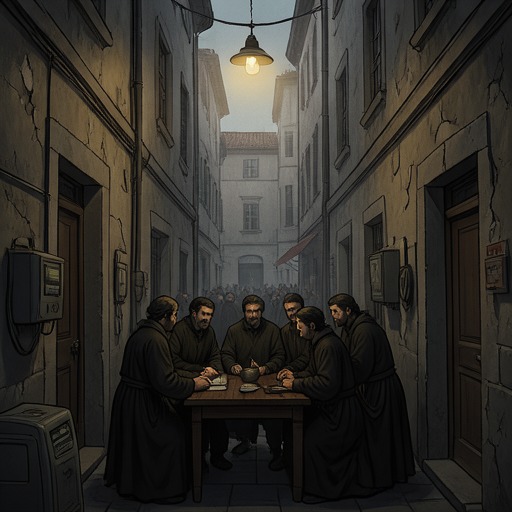
Devereux is the person to whom Wade gives the clearest indication that he is close to confirming his suspicions. After Wade’s death, Devereux does not accept the overdose account. He arranges seven clocks on the mantelpiece and discards an eighth as a symbolic warning that Seven Dials will avenge the death of one of its members. He watches for signs of perturbation, turning the clocks into a test of anyone who might know more than they admit. Battle later explains that Wade was himself No. 1 in the society. The memorial arrangement thus points toward the organization while also giving the concealed murderer a reason to fear that Wade’s death has not been forgotten.
Posthumous Revelation and Significance
Wade’s story is disclosed in layers: first the apparently vacant young man, then the body reported as a death in sleep, then the unfinished letter that conflicts with an accidental overdose, and finally Battle’s account of the poisoning and its concealment. Each reinterpretation changes the meaning of what came before. His outwardly uncomplicated manner does not make him a simple character; instead, the narrative initially leaves his private knowledge inaccessible and lets the clues establish its importance after his death.
At the final gathering, Battle identifies No. 1 as Gerald Wade and describes him as a gallant man who died for his country. His place in the Seven Dials Society gives his private investigation a wider context: he was not merely a visitor who stumbled into a dangerous affair, but a member whose death the organization regarded as a loss. The clocks, the unfinished warning, and the false bedside evidence all converge on the same consequence. Wade’s murder both prompts the inquiry and demonstrates how easily a carefully staged appearance can conceal a deliberate crime.